Your design isn’t the problem. Your message is.
Brand Strategy and Website Design can look polished and still not convert. Pretty is easy. Effective forces decisions: who you help, what you sell, what result you deliver, and what you want the visitor to do next. If your site and socials don’t respond quickly, people bounce.
That aligns with what established research identifies as trustworthy design cues.
Build My Custom Package | View Work
Quick answer
Your brand looks fine, but your buyer cannot quickly tell what you do, who it is for, what they get, and what happens after they click. Clear offers, direct CTAs, visible proof, and consistent messaging across your site and socials fix that.
TLDR
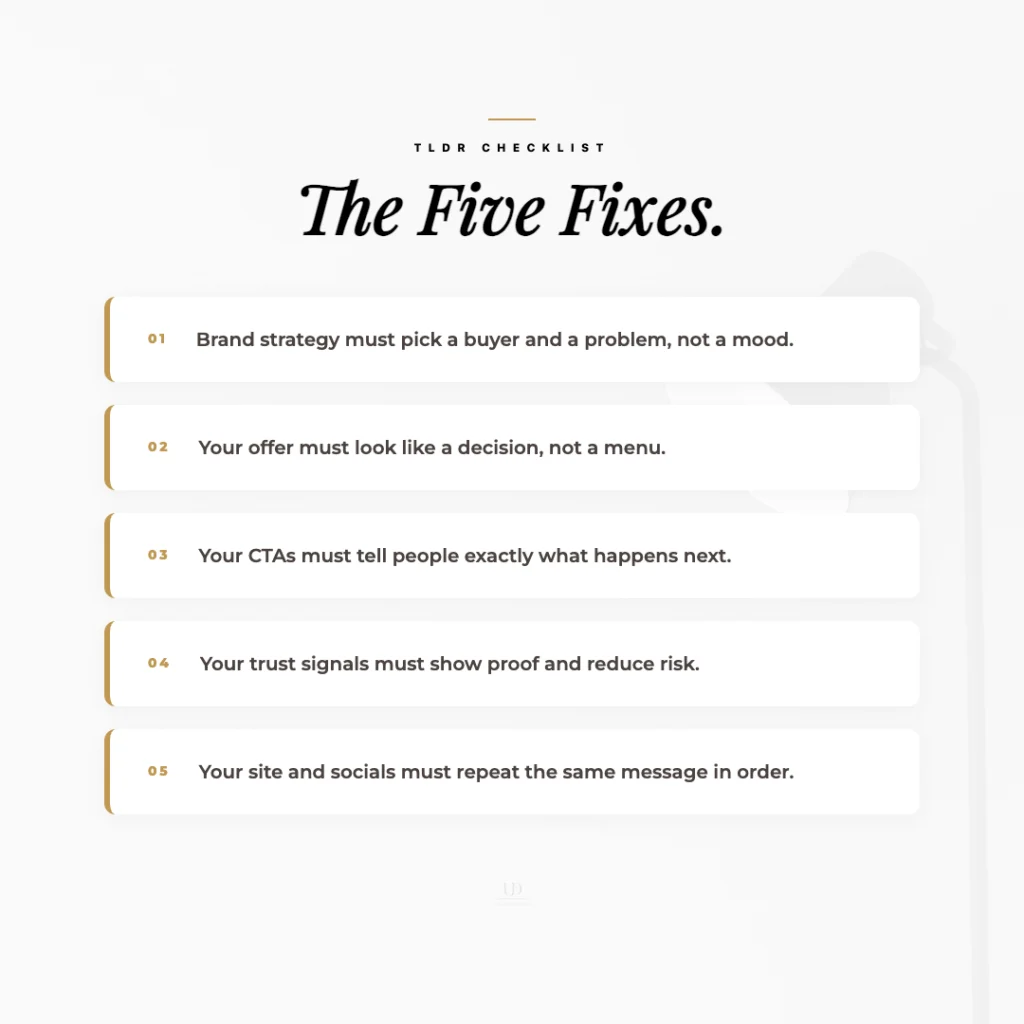
- Brand strategy must pick a buyer and a problem, not a mood.
- Your offer must look like a decision, not a menu.
- Your CTAs must tell people what happens next.
- Your trust signals must show proof and reduce risk.
- Your site and socials must repeat the same message in the same order.
The gap between pretty and effective
A good-looking site can still feel risky. When people feel uncertain, they hesitate. Stanford’s work on credibility shows how quickly users form judgments, and what they look for when deciding if a site feels legitimate, including the Stanford credibility guidelines.
Fast test: Can a stranger answer these in 10 seconds?
- What do you do
- Who is this for
- What should I do next
- Why should I trust you
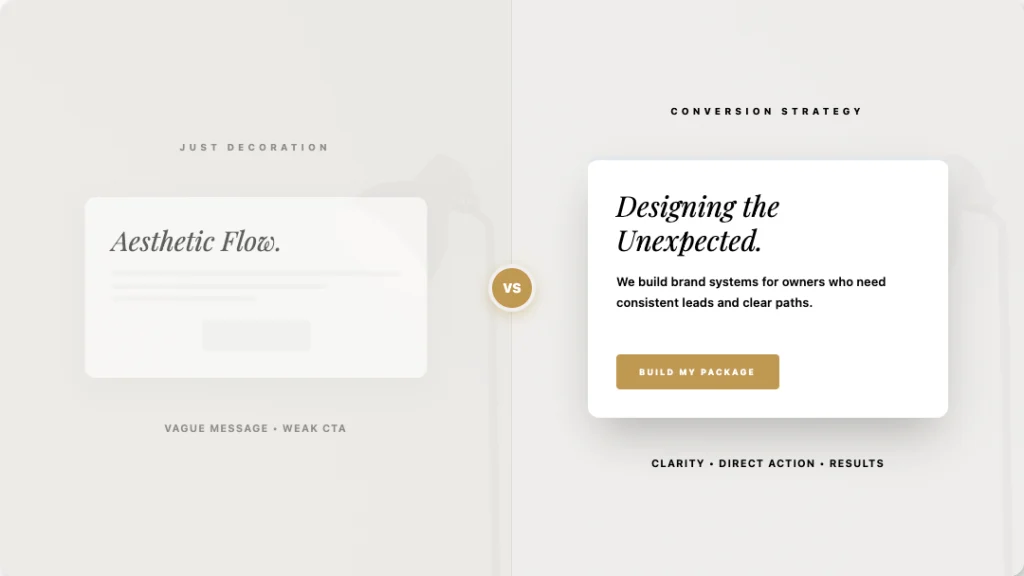
If any answer feels fuzzy, your Brand Strategy and Website Design become decoration.
Fix 1: Brand strategy that makes buying simple
Most brand strategies get stuck on adjectives. You want decisions that make your homepage and captions easy to write.
- Buyer: owner-led, time poor, wants consistent output without managing a team.
- Problem: inconsistent design and messaging across the web and social media
- Outcome: a consistent system that makes the next step obvious
- Wedge: boutique attention with a structured process
Helpful content wins because it answers real questions clearly. Google spells it out in their people-first content guidance.
Fix 2: Offers people can actually pick
Custom is not the problem. Unframed custom is the problem. People want a recommendation. They do not want to build your scope for you.
Give them three lanes so they can self-sort fast:
| Package | Best for | What they get |
| Brand Starter | New or inconsistent brands | Core brand system plus starter templates |
| Brand Plus Collateral | Launches and multi-touchpoint needs | Brand system plus launch-ready assets |
| Marketing Partner | Ongoing output | Monthly creative support with consistent delivery |
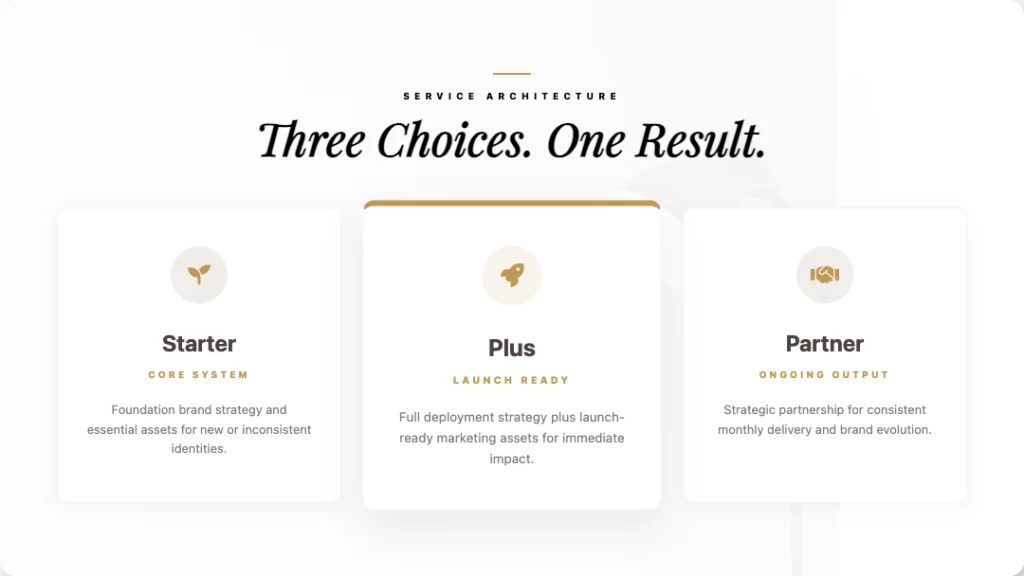
This structure reduces decision fatigue. If you want the research base behind it, start with classic findings on the effects of choice overload.
Build My Custom Package | See Packages
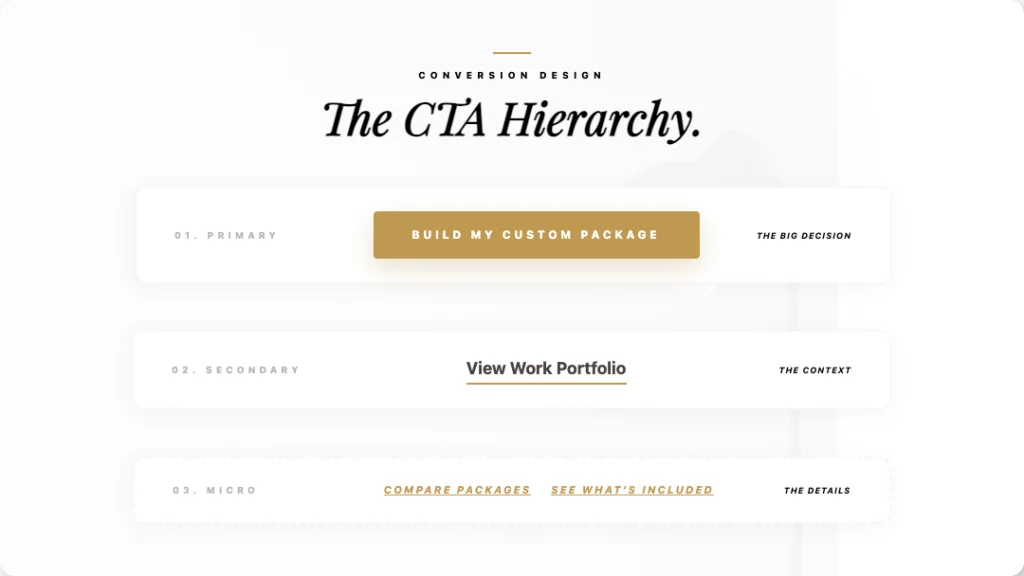
Fix 3: CTAs that tell people what happens next.
If your CTA reads “Contact” or “Learn more,” you make the visitor guess. Guessing kills action. Your CTA should describe the next step and the payoff.
- Primary: Build My Custom Package
- Secondary: View Work
- Micro CTAs: Compare packages, See what’s included, Get a scope recommendation
Repeat the same primary CTA across your homepage, services, portfolio, and social bios. Consistency is not a branding preference. It is a usability principle, covered directly in the consistency and standards heuristic.
Fix 4: Trust signals that remove risk
People hesitate because they notice things and interpret them fast. That pattern is described in Stanford’s prominence interpretation theory, and it maps cleanly to what you should place on the page.
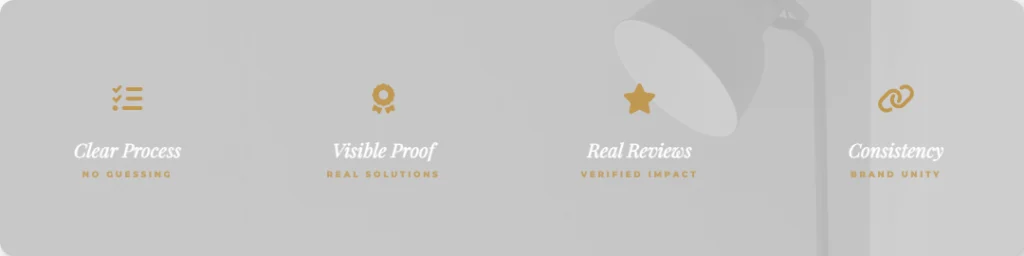
- Clear process steps: what happens after the form, and what a typical timeline looks like
- Proof with context: portfolio plus what the work solved
- Consistent business details across your site and social profiles
- Real reviews and testimonials, used responsibly
If you publish reviews, follow the rules in the Consumer Reviews Rule FAQs.
Fix 5: Consistency across web and social.s
Inconsistent messaging makes you look new, even if you are not. Consistent messaging makes you look established, even if you aren’t. People trust what feels coherent.
Match these across your site and social profiles:
- One line value statement
- Same service names
- Same CTA language
- Same process summary
Optional but smart: add structured data so search engines understand who you are and connect your brand assets, using Organization structured data.
The conversion path your site should support
| Step | Visitor question | What answers it | Next step |
| 1 | Am I in the right place | Clear hero message plus services snapshot | Build My Custom Package |
| 2 | Do you do what I need | Packages that show a starting point | See Packages |
| 3 | Can I trust the quality | Portfolio with short context captions | View Work |
| 4 | What happens after I reach out | Clear next steps on the quote page | Get a Scope Recommendation |
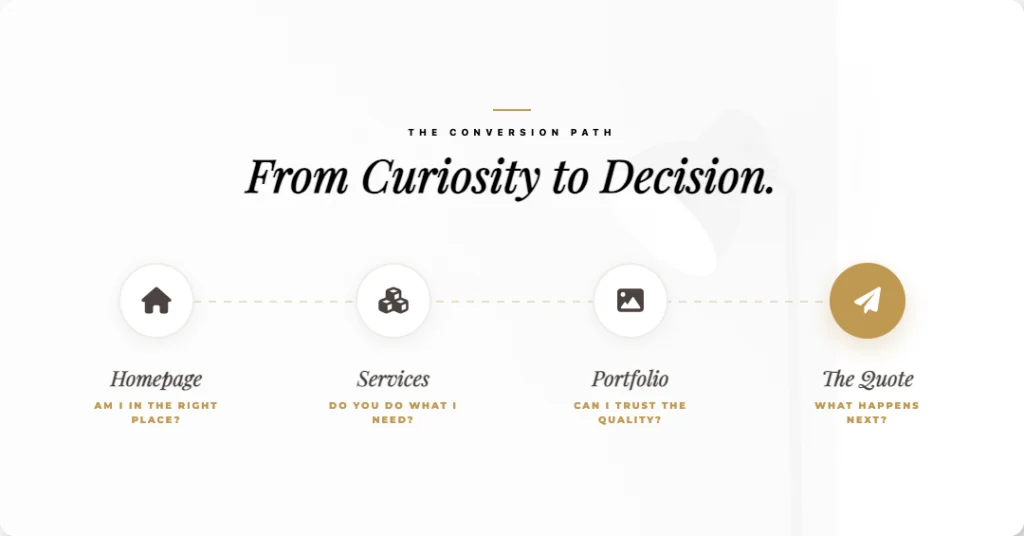
If your Brand Strategy and Website Design support this path, your site stops acting like a brochure and starts producing leads.
Before you waste another month “tweaking” your brand
Most people do not need a new logo. They need a message that makes the next step obvious. Use these questions to spot what is actually blocking sales.
Why does my brand look good but still not sell?
Your visuals can look clean while your message stays unclear. If people cannot tell what you do, what they get, and what to do next, they leave. Fix the offer framing, add direct CTAs, and show proof with process clarity.
What is the fastest way to improve conversions?
Clarify one primary action and repeat it everywhere. Use one CTA language, one offer table, and one simple process. Add proof near the first CTA. Remove guesswork from your quote form by asking for goals, a timeline, and a budget range.
What trust signals matter most for a service business?
Process clarity, proof with context, accurate business details, and reviews you can stand behind. People judge credibility quickly, which is why practical web credibility research stays relevant.
Do I need a niche to convert?
No. You can market to a behavior-based buyer: owners who want a consistent brand system and a guided process. Keep messaging inclusive, then organize proof by needs, such as launch, refresh, and ongoing support.
How do I keep my site and socials consistent?
Repeat the same one-liner, service names, and CTA language across your bio, pinned posts, and homepage. Use templates for visuals and captions so your output looks intentional every time.
If you want your Brand Strategy and Website Design to start producing leads instead of compliments, stop tinkering and get a real scope recommendation.
Build My Custom Package | Contact
Simple deal: you submit your goals, timeline, and must-haves. You get a recommended scope, a clear next step, and a plan that matches how you actually sell.